The observatory
This (part) project is a growing collection of computational instruments for observing how natural systems organize themselves. The goal is to extract principles and measurable structures from behavior, derive candidate rules/heuristics, and translate them into computational models that can later be applied to digital systems.
Digital systems shape behavior because they structure what is visible, reachable, and likely. Today, many of these structures are optimized for efficiency and conversion, which often produces linear paths and predictable outcomes.
Observatory starts from a different question: what if we treat organization itself as a design material and learn alternative organizational logics from natural systems that already solve complexity through local rules, feedback, and adaptation? The prototypes on this page are not final applications, but instruments for observing behavior, extracting measurable structures, and translating them into computational models that can later be tested in digital environments.
Concept
Many systems in nature produce complex organization without central control: patterns emerge through local interactions, feedback, and adaptation. In the Observatory, I build prototypes that make these dynamics legible — as structures that can be measured, compared, and eventually modeled.
The Question
How can natural principles be used as a structural model for digital ecosystems to develop more dynamic and relational forms of organization, navigation, and interaction?
Prototype 01 – Particle Life Playground
This prototype was built as a first observation instrument: a way to study how complex, collective behavior can emerge from extremely simple local rules: attraction and repulsion. Inspired by the project particle-life and biophysical interaction models, where local forces produce global structure.

The particle playground makes it possible to run many variations and observe recurring patterns such as clustering, boundaries, flows, and phase shifts between stability and chaos. The goal is not to simulate humans directly, but to build intuition and measurable descriptors for how “rule sets” shape movement and collective organization

Prototype 02 – Physarum
This prototype explores network growth and connection behavior using slime mold (Physarum polycephalum) as an observation model for decentralized organization. By placing “food nodes” according to website metrics (e.g., users and engagement time), the experiment turns abstract analytics into a spatial system and makes connection formation observable.
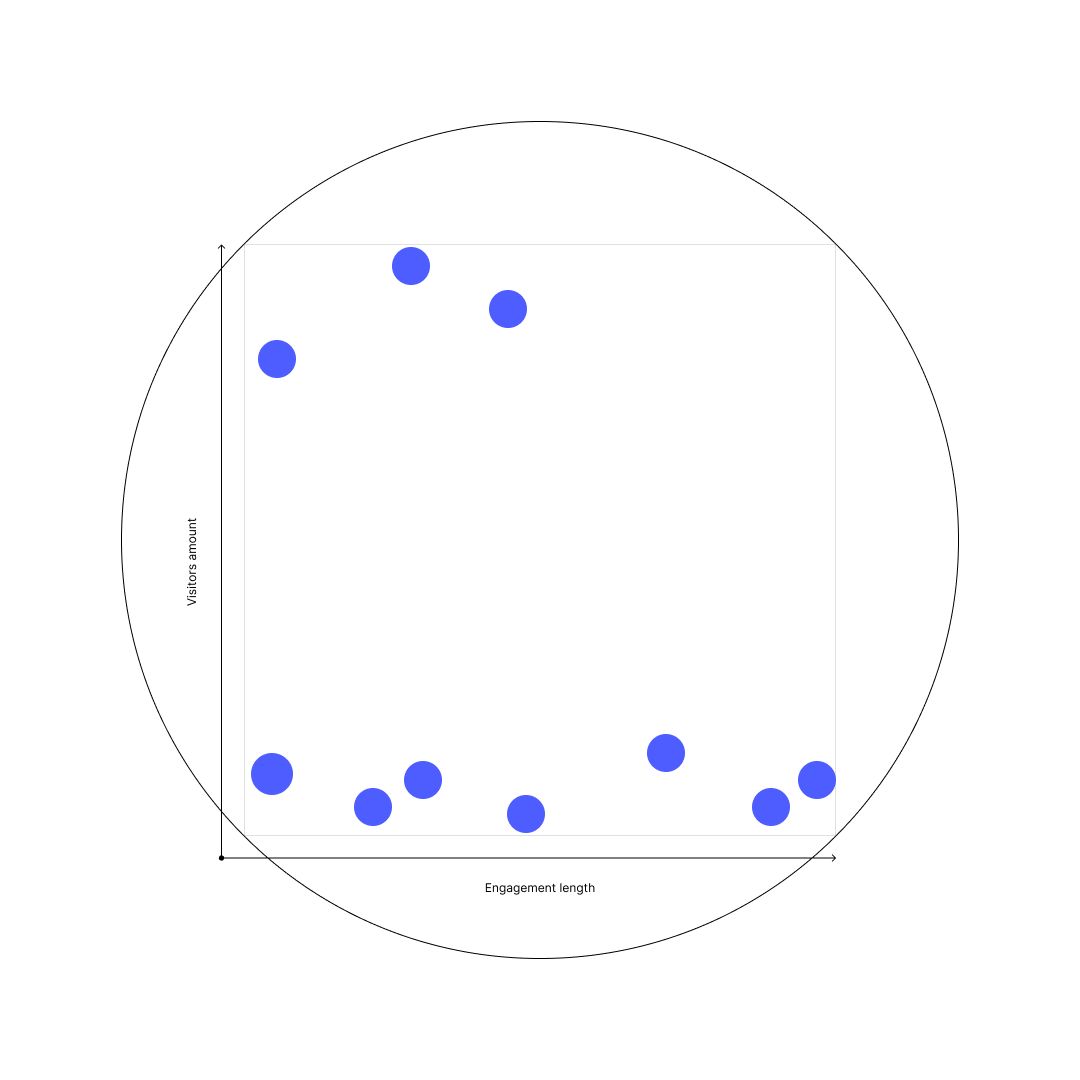
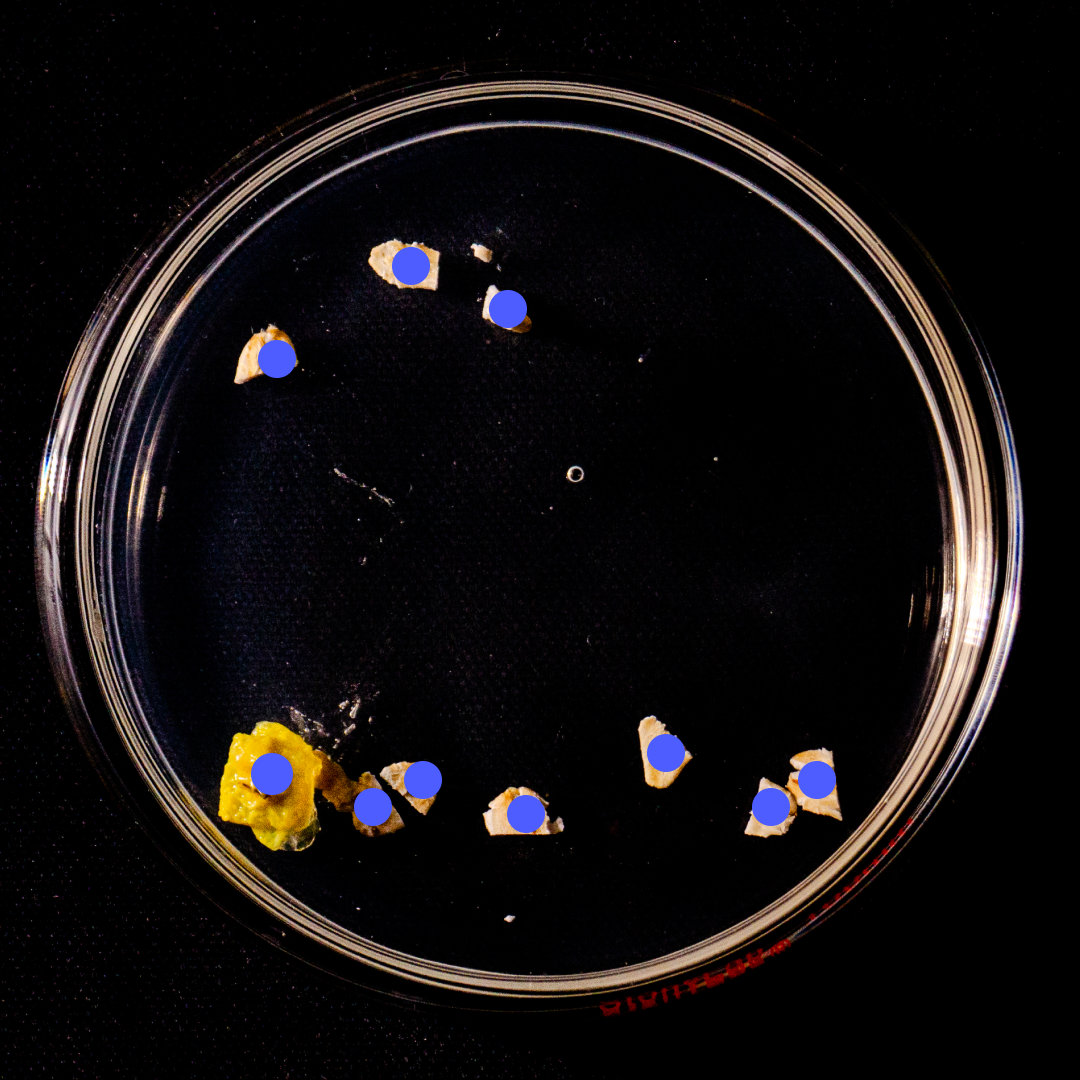
Which nodes become central, which links persist, and how the resulting network changes when the starting point shifts. The aim is to collect many comparable runs to identify measurable structural signatures